
The Benefits of Flexographic & Digital Printing

Ssarah Barner
•

Flexographic vs. Digital Printing: Choosing the Right Press for Your Labeling Needs
At Classic Label, we understand the importance of selecting the right printing technology to match the needs of your project. Two of the most prominent printing methods in the packaging and labeling industry are flexographic (flexo) printing and digital printing. Each has its strengths, making them suitable for different applications.
Read below to learn about the key differences, explore the industries they serve, and why having both options benefits all of our clients.
A Brief History Lesson…
Flexographic printing traces its origins back to the late 19th century when it was initially developed as aniline printing. However, due to ink safety concerns, the process was refined and rebranded as flexographic printing in the 1950s. Over the years, advancements in plate technology, ink formulations, and press speeds have made flexo the go-to choice for high-volume label and packaging production.
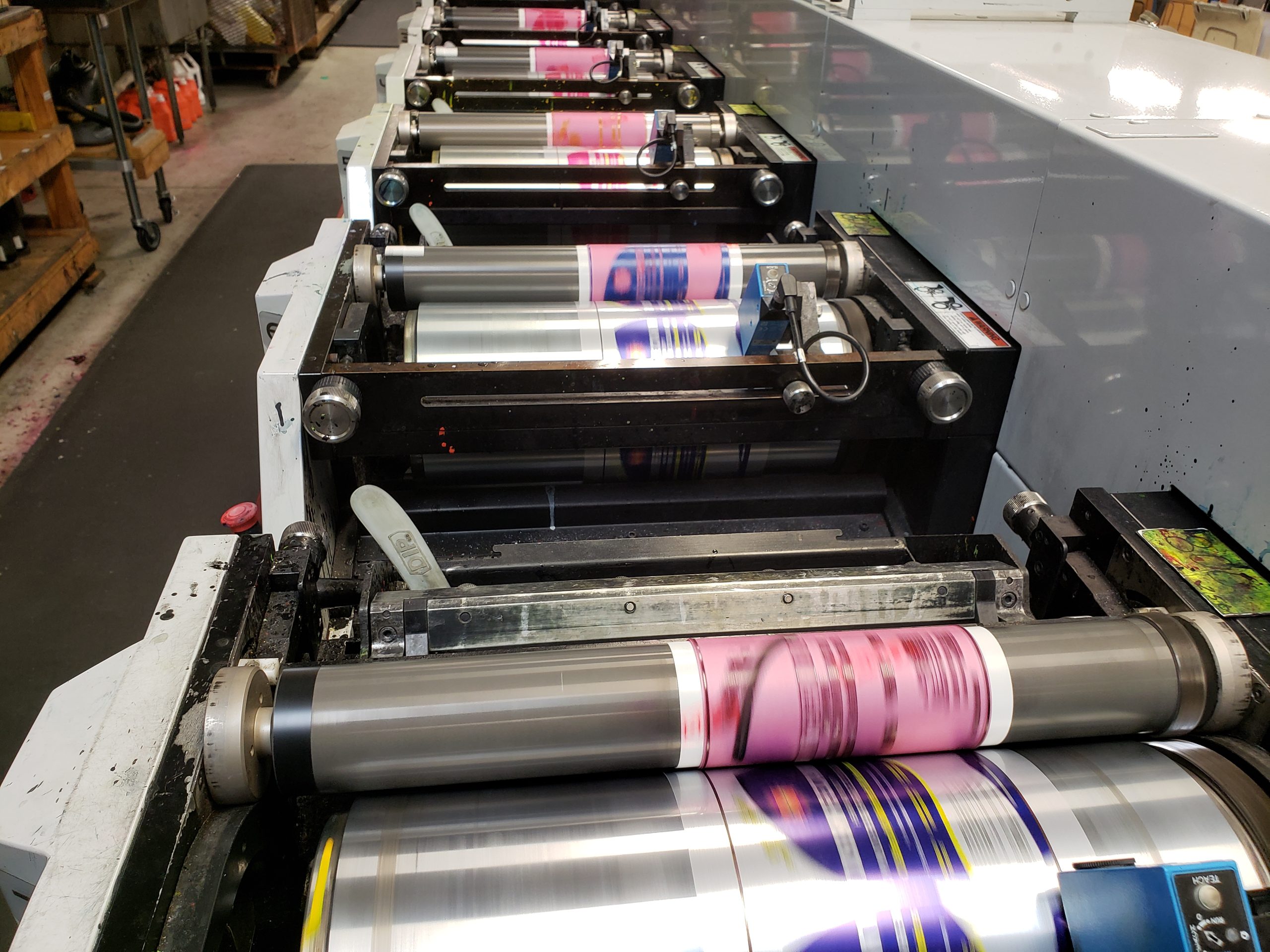
The right press isn’t about flexo versus digital — it’s about matching the method to the story your label needs to tell.
Digital printing emerged in the 1990s as an alternative to traditional methods, eliminating the need for printing plates. Instead of transferring ink mechanically, digital printers use advanced inkjet or electrophotographic technology to apply ink directly onto the substrate. This innovation has paved the way for short runs, variable data printing, and rapid customization, making digital printing an indispensable tool in the modern printing landscape.
Key Differences Between Flexographic and Digital Printing
Key Differences Between Flexo and Digital Printing
1. Printing Process
Flexographic Printing: Uses flexible relief plates wrapped around rotating cylinders to transfer ink onto various substrates.
Digital Printing: Uses inkjet or laser-based technology to apply ink directly to the material without the need for plates.
2. Setup and Cost Efficiency
Flexo: Higher initial setup costs due to plate creation but more cost-effective for large production runs.
Digital: Lower setup costs with no plates required, making it ideal for smaller batches and on-demand printing.
3. Print Speed and Volume
Flexo: Extremely fast and efficient for large-scale label production.
Digital: Slower than flexo for mass production but allows for quick turnaround on short runs.
4. Customization & Variable Data
Flexo: Best for consistent designs but less efficient for unique, variable data printing.
Digital: Allows for personalization, sequential numbering, barcodes, and design variations within the same run.
5. Substrate Compatibility
Flexo: Works on a broad range of materials, including paper, film, foil, and textured surfaces.
Digital: Works best with pre-treated or coated materials, though advancements continue to improve substrate flexibility.
6. Environmental Considerations
Flexo: Typically uses solvent-based inks but has more eco-friendly options like water-based inks.
Digital: Generates less waste with no plates and often utilizes UV or water-based inks, reducing environmental impact.
———
Long Story Short…Having Both Printing Options Leads to Better Outcomes
As a full-service printing provider, we recognize that no single printing method fits every job.
By offering both flexographic and digital printing, we ensure that our clients receive the best possible results tailored to their specific needs.
Choosing the right printing method can make all the difference in branding, cost-effectiveness, and time-to-market. By leveraging both technologies, we provide the flexibility, quality, and scalability needed to bring your label and packaging vision to life.
Interested in finding the best printing solution for your project? Contact us today to discuss your needs!
