
The Modern Brand’s Packaging Playbook: Integrating Flexible Pouches and Rollstock

Terry Wiseman
•

Walk down any retail aisle today, and you’ll notice a beautiful packaging ecosystem at play. On one shelf, you have the undeniable premium heft of glass jars and bottles, adorned with textured, high-end pressure-sensitive labels. Right next to them, you’ll find vibrant, lightweight flexible pouches standing proudly on display.
At Classic Label, we know that the "best" packaging format isn't a zero-sum game. There will always be a place for rigid containers and the stunning custom labels that bring them to life. However, for many product manufacturers and CPG brands, adding flexible packaging to their lineup represents a strategic unlock for supply chain logistics, unit economics, and shelf life.
Whether you're launching a lightweight refill pouch to complement your flagship glass bottle, or rolling out a high-speed snack line, you need a partner who understands the entire commercial printing spectrum. Let’s look at the hard data driving the integration of flexible packaging, and break down how custom pouches and rollstock can revolutionize your production line.
The Hard Numbers: The Strategic Shift to Flexible Formats
The global flexible packaging market is surging, projected to reach over $351 billion by 2026. In the United States, it now accounts for roughly 20% of the entire packaging market. Food applications alone generate approximately $19 billion in annual domestic revenue.
Brands aren't necessarily abandoning rigid containers—they are diversifying. Many are utilizing flexible packaging to launch "eco-refill" lines or to reduce freight costs on specific SKUs. The logistical advantages are hard to ignore:
The 26-to-1 Freight Advantage: Rigid packaging ships empty. When you freight glass or plastic, you are largely paying to ship air. Flexible packaging ships flat. A supply chain analysis reveals that 26 truckloads of empty glass jars can be replaced by a single truckload of empty flexible pouches for the exact same volume of product.
Carbon and Energy Slashing: Producing a single flexible pouch uses up to 75% less energy and emits a fraction of the carbon compared to standard metal tins or heavy plastics. For brands facing increasing pressure to reduce their carbon footprint, this source reduction is a massive win.
Material Efficiency: Flexible packaging achieves up to a 50% reduction in material consumption compared to rigid alternatives, lowering both inbound logistics and outbound dimensional-weight shipping fees.
The Synergy: Labels and Flexible Packaging Working Together
One of the biggest misconceptions is that a brand has to choose between labels and flexible packaging. In reality, they are deeply complementary.
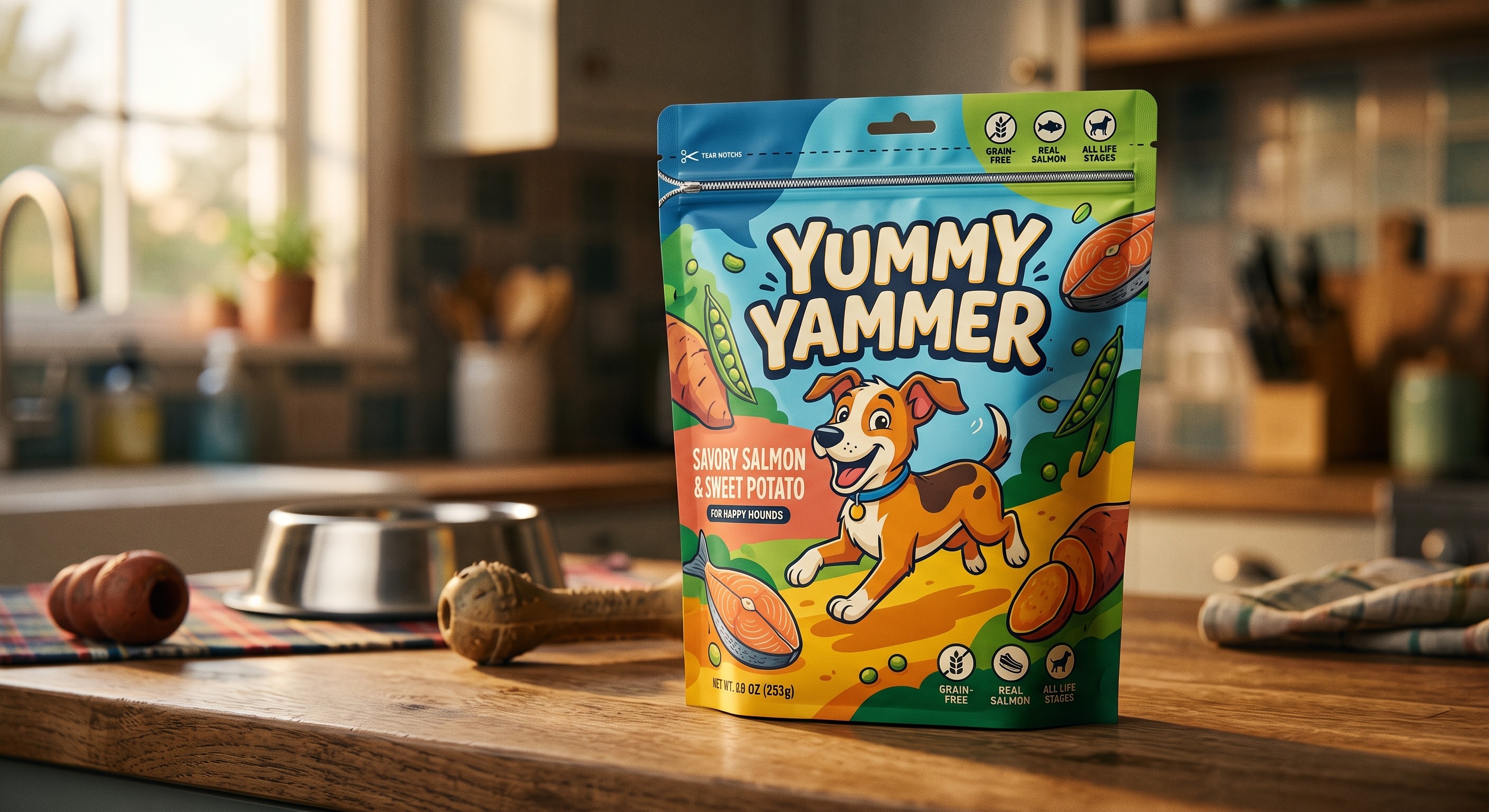
For short-run seasonal products, test markets, or artisanal lines, the most cost-effective and agile strategy is often pairing a high-quality, blank stock pouch with a vibrant, custom pressure-sensitive label. This allows for rapid iteration without the setup costs of fully printed film.
However, when a SKU hits critical mass, transitioning to fully printed custom pouches or rollstock offers 360-degree billboard branding and lower per-unit costs at scale. A true packaging partner helps you navigate exactly when to use a label on a pouch, and when to graduate to fully printed flexible webs.
Deconstructing the Formats: Pouches vs. Rollstock
In commercial packaging, "flexible" generally boils down to two heavy hitters, each serving very different production environments.
1. Custom Pouches: The Retail Heavyweight
Pre-formed custom pouches currently capture over 46% of the global flexible packaging revenue. They arrive at your facility fully formed, sealed on three sides, and ready to be filled and sealed at the top. They are the ideal solution for co-packers, growing brands, or operations without automated forming machinery.
Stand-Up Pouches (SUPs): Utilizing a bottom gusset (like a Doyen or K-Seal), these pouches stand unassisted. They offer massive retail visibility and are easily customized with resealable zippers and tear notches.
Lay-Flat (Pillow) Pouches: Highly economical, these are sealed on three sides and lay completely flat. They are the go-to for single-use samples or heavily portioned items.
2. Rollstock Film: The High-Speed Standard
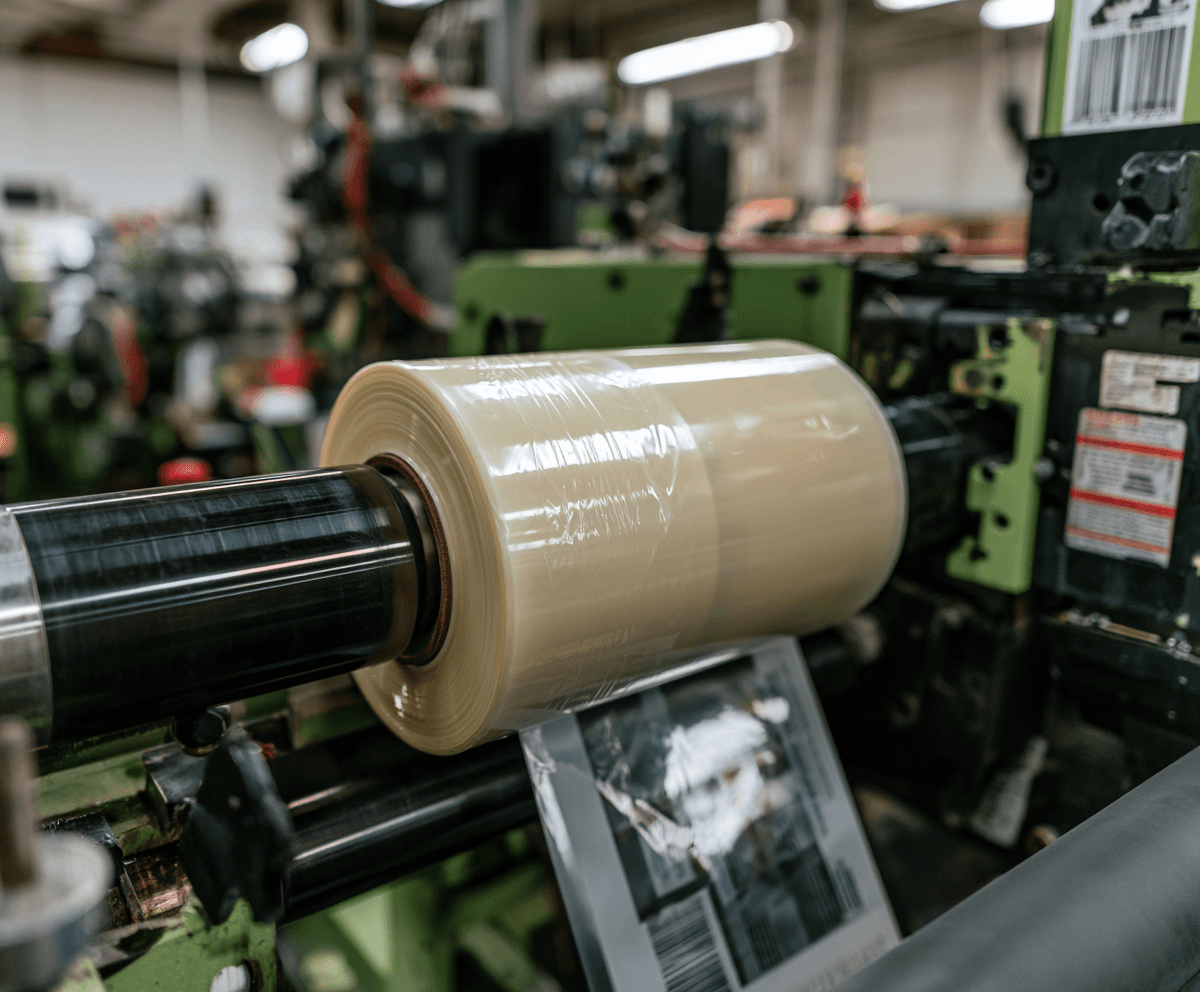
If your facility utilizes Vertical Form-Fill-Seal (VFFS) or Horizontal Form-Fill-Seal (HFFS) machinery, you need rollstock. Instead of individual bags, you receive your custom-printed lamination wrapped tightly around a core. Your packaging line unrolls this continuous web, forms it into a pouch around your product, and heat-seals it in milliseconds.
Rollstock requires precise engineering. The film’s Coefficient of Friction (COF) must be perfectly calibrated so it glides through your specific machinery without jamming. If your throughput is high and your goal is the absolute lowest per-unit cost, rollstock is the standard.
The Science of the Barrier
Flexible packaging relies on highly engineered, multi-web lamination designed to keep oxygen, moisture, and UV light out, while keeping product freshness in. Depending on your product, distinct layers are laminated together:
The Print Substrate: Typically PET (Polyethylene Terephthalate) or OPP (Oriented Polypropylene), offering a tough surface for high-definition commercial printing.
The Barrier Layer: Materials like EVOH (Ethylene Vinyl Alcohol), Aluminum Foil, or metalized films that act as an absolute wall to preserve shelf life.
The Sealant Layer: Generally LLDPE (Linear Low-Density Polyethylene), engineered to melt and form an airtight seal when heat is applied on your packaging line.
Scale Your Packaging Portfolio with Classic Label
Choosing the right structure, machinery compatibility, and printing method is a high-stakes decision. A slight miscalculation in your film’s barrier properties or web tension can result in massive line downtime.
At Classic Label, we engineer comprehensive packaging portfolios. Whether you need a tactile, embellished label for your flagship spirit bottle, a digitally printed label for a blank kraft pouch, or a 100,000-foot run of high-barrier rollstock film, we have the commercial printing infrastructure to execute it flawlessly.
We analyze your product's chemical makeup, your co-packer's machinery specs, and your retail strategy to engineer the exact solution that elevates your brand and protects your bottom line.

